Docs / for WooCommerce / WooCommerce store trust and reviews
AEO Ultimate for WooCommerce
WooCommerce store trust and reviews
Online stores are held to Google’s strictest trust bar, because a bad purchase costs a shopper real money. Store Trust audits the signals search engines and AI assistants check before they recommend a store, and the Reviews module turns the reviews you collect into schema. Watch the walkthrough, or read the guide below.
Read the transcript
0:00 Why stores need trust signals
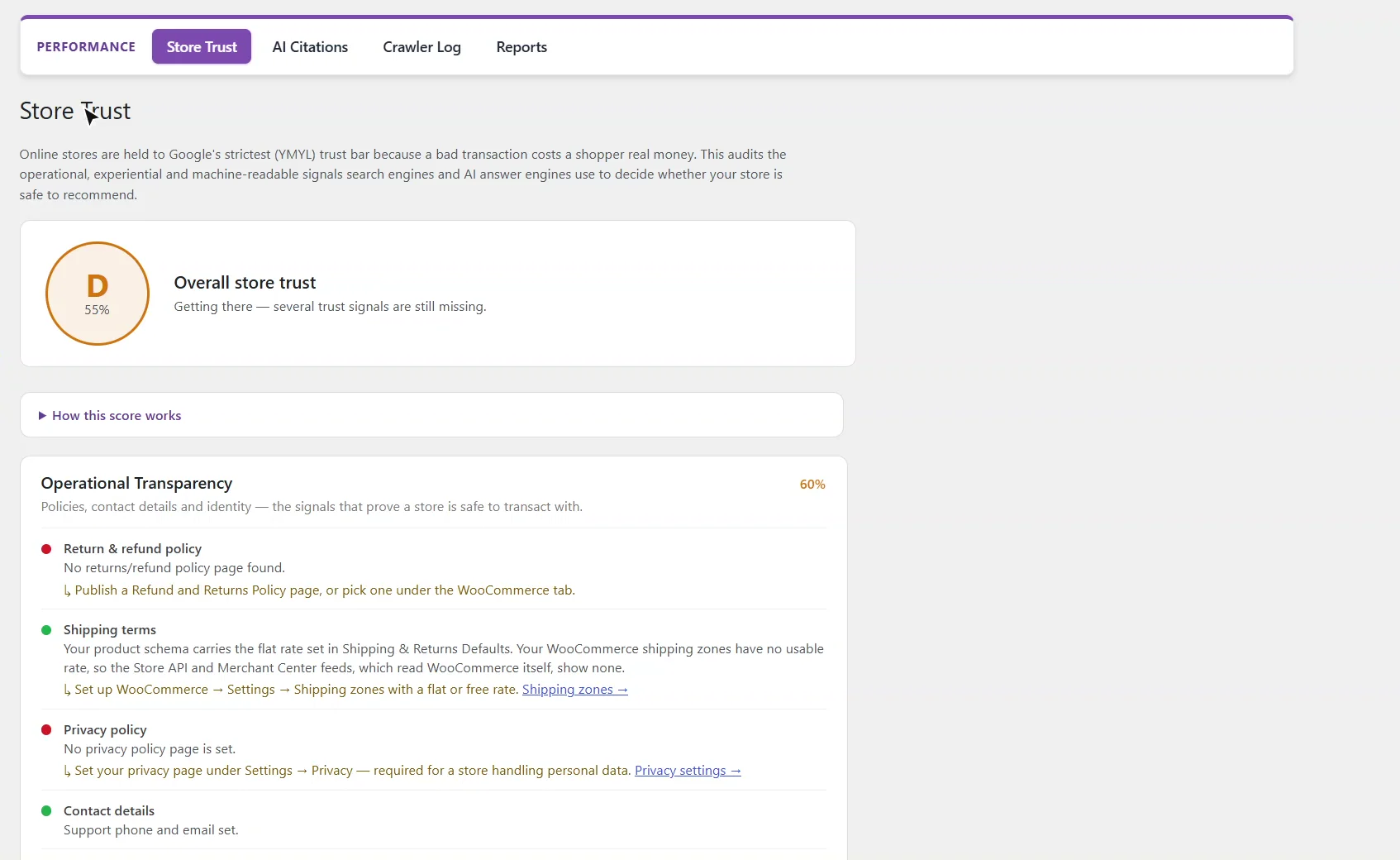
Online stores are held to Google's strictest trust bar, because a bad purchase costs a shopper real money. Store Trust audits the signals search engines and AI assistants check before they recommend a store, and grades them. This store scores fifty-five percent.
0:19 Policies, contact and identity
Operational transparency covers policies, contact details and business identity. Here, the returns and privacy pages are missing, and each finding says exactly what to publish and where.
0:33 Honest about shipping
Shipping terms say where the rate really comes from. This store's schema uses a default flat rate, because its WooCommerce shipping zones have none, so agents reading WooCommerce directly see no shipping cost at all.
0:47 First-hand proof
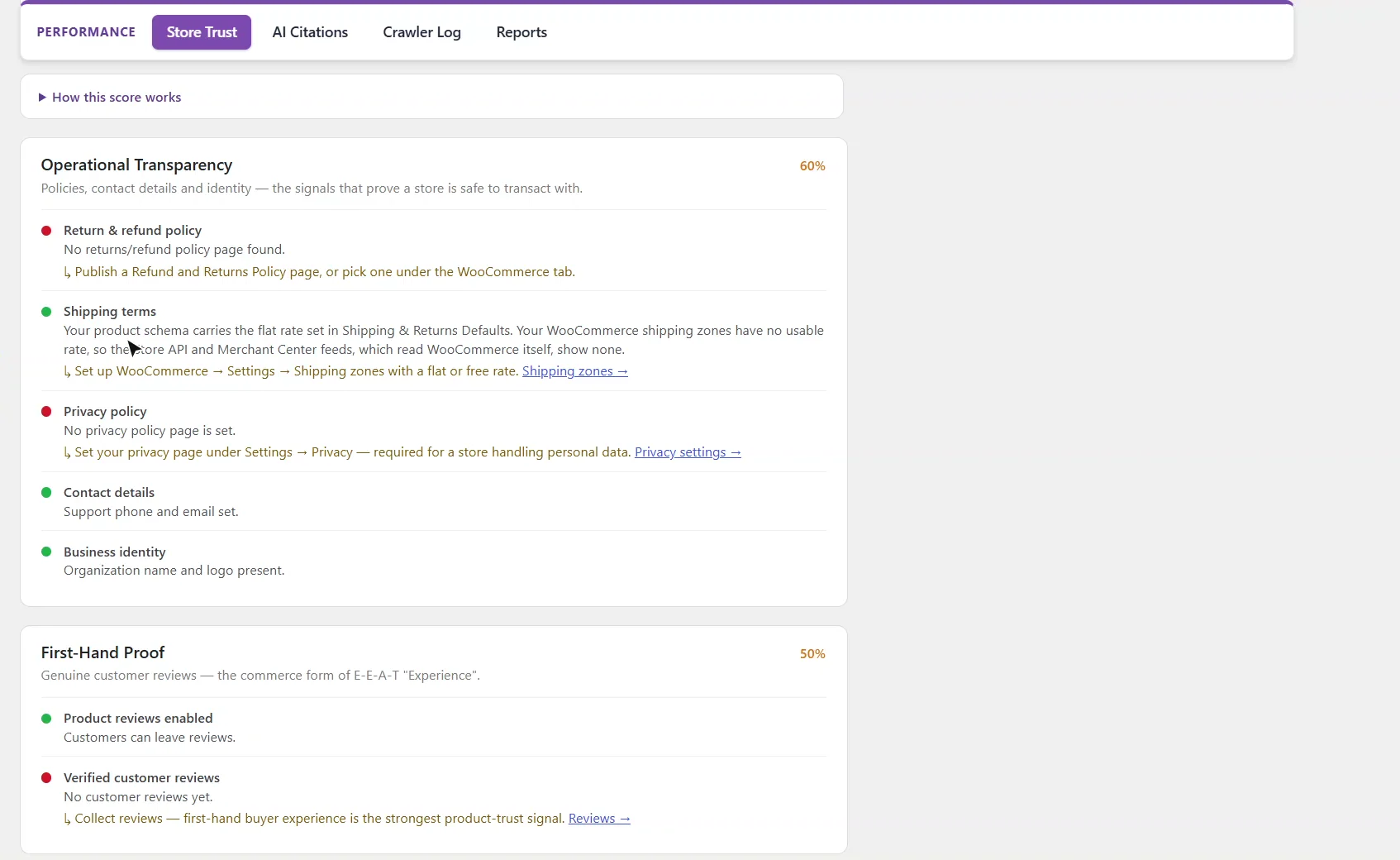
First-hand proof means genuine customer reviews, the commerce form of experience. Reviews are switched on here, but no customer has left one yet.
0:58 Machine-readable trust
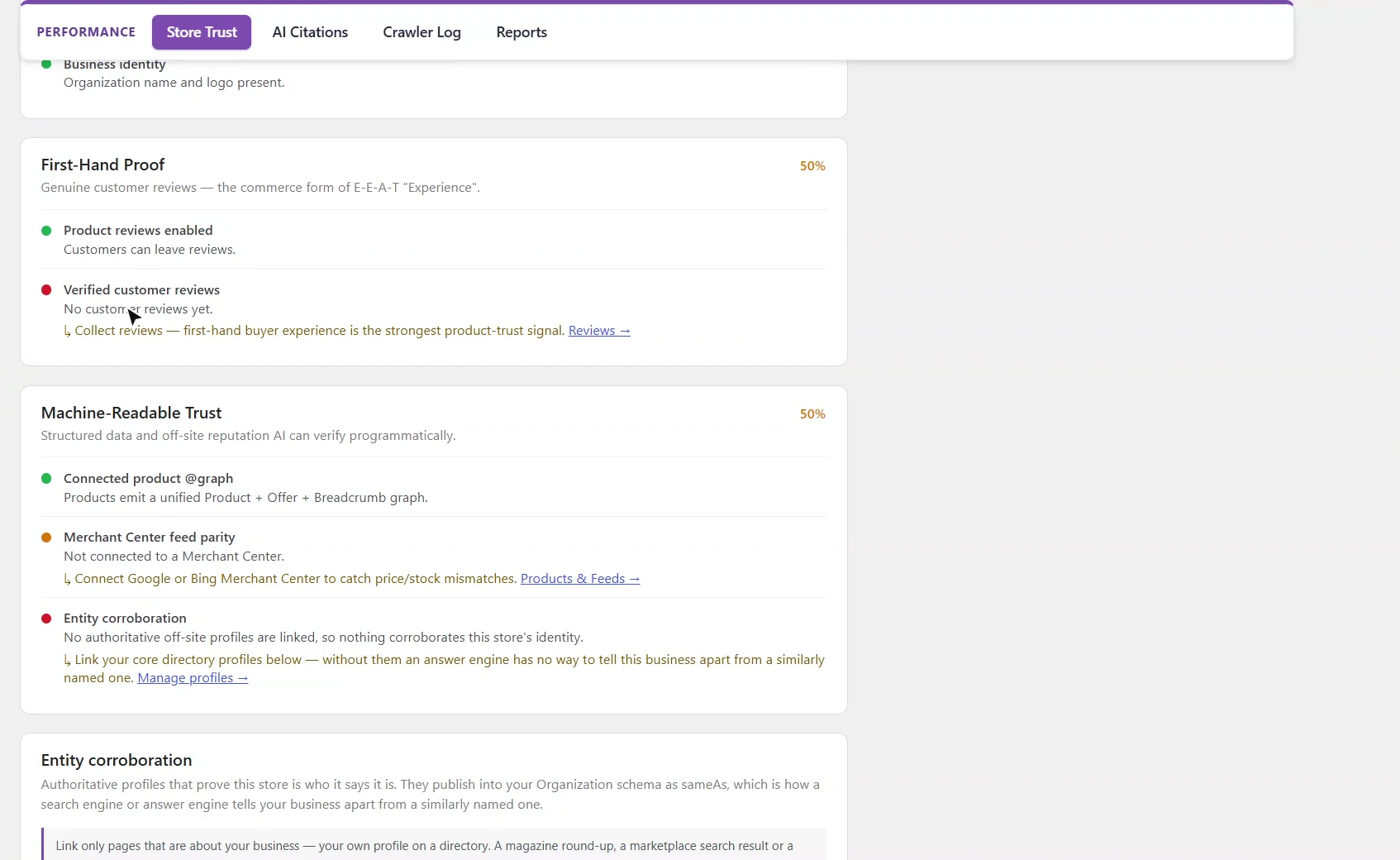
Machine-readable trust is what an AI can verify for itself: a connected product graph, Merchant Center prices that match the store, and outside profiles that confirm who you are.
1:11 Profiles that prove who you are
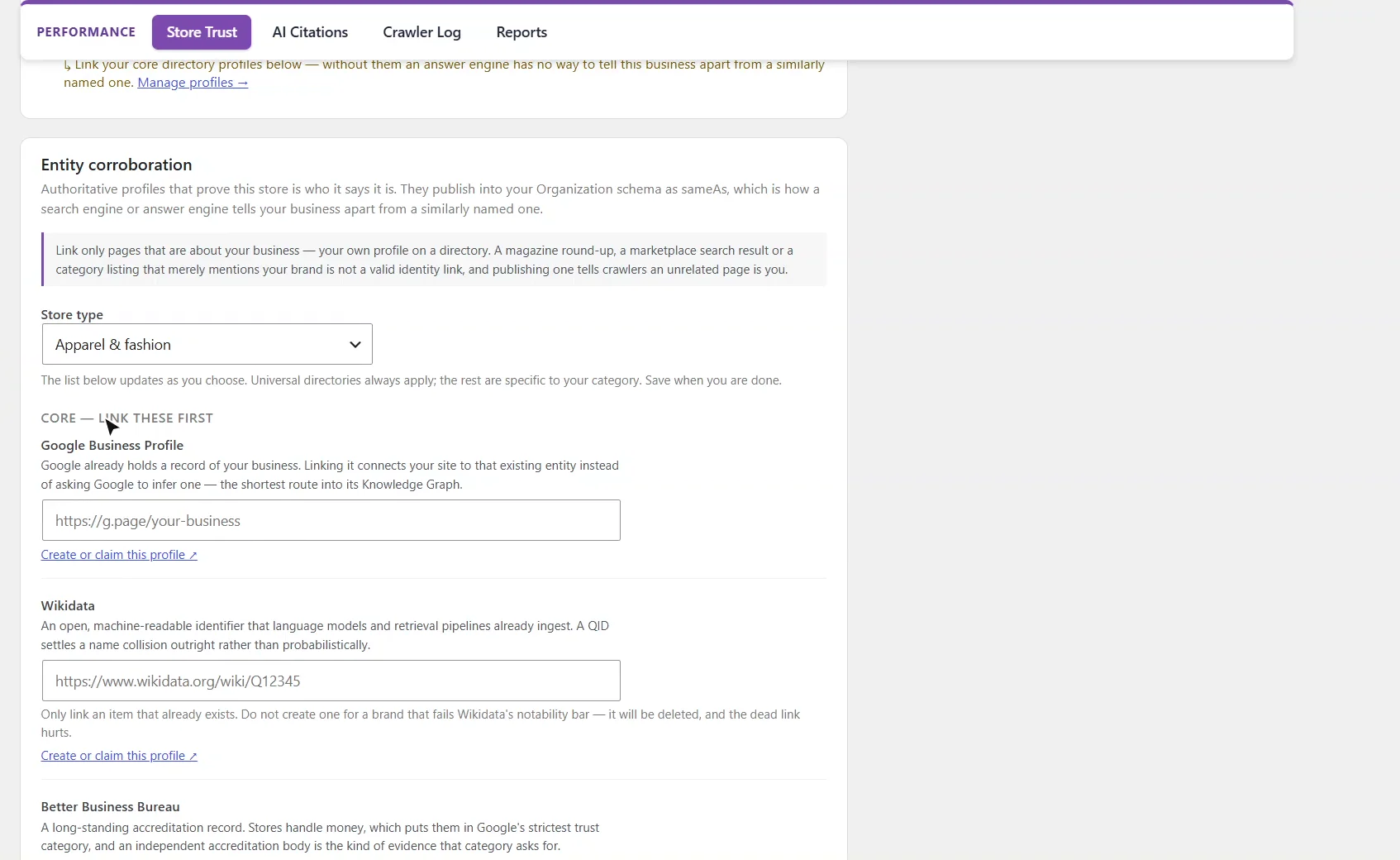
Entity corroboration lists the profiles worth linking, matched to your store type. Change the type and the list changes with it. Link only pages about your business; they publish into your Organization schema as same-as links.
1:27 Reviews into schema
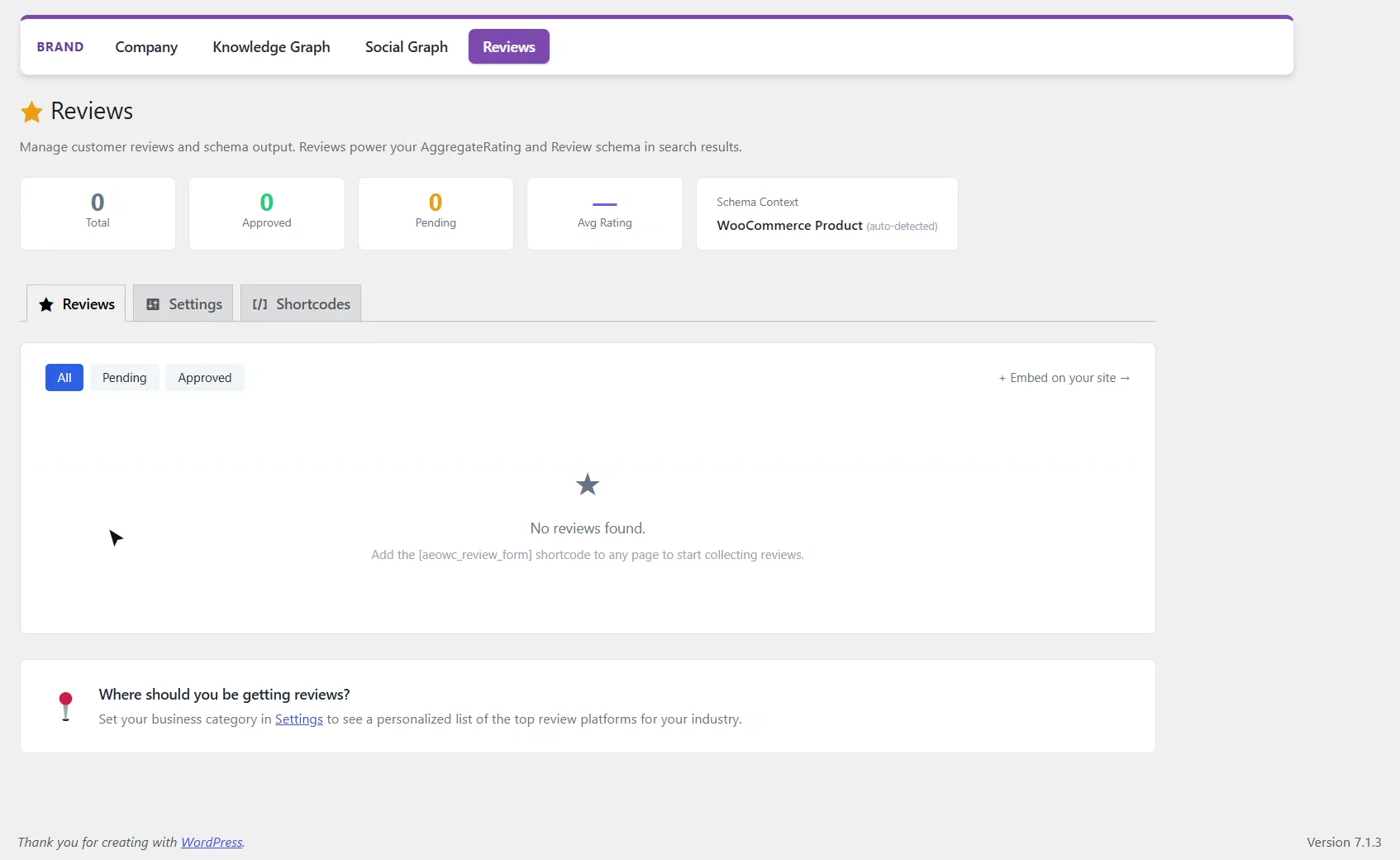
The Reviews module turns the reviews you collect into review and rating schema, matched automatically to the right type, here WooCommerce products. To start collecting, add the review form shortcode to any page.
1:42 Next: Local Store
That's store trust: show shoppers and AI that you're safe to buy from. Next, Local Store, for shops with a counter.
What does Store Trust measure?
Open AEO Ultimate → Performance → Store Trust. It grades your store on three pillars: operational transparency (policies, contact details and identity), first-hand proof (genuine customer reviews), and machine-readable trust (what an AI can verify for itself). Open How this score works to see each measure, its weight, and what the score cannot tell you.
Which store policies do search engines and AI look for?
Operational transparency checks for a return and refund policy, shipping terms, a privacy policy, contact details and a business identity. Each missing signal says what to publish and where. Shipping terms also say where the rate comes from: a default flat rate set in the plugin reaches your product schema, but not the Store API or Merchant Center feeds, which read WooCommerce’s own shipping zones, so the page tells you when that is the case.
Why do customer reviews matter for AI search?
Genuine reviews from buyers are the commerce form of E-E-A-T “experience”, and the strongest trust signal a store can publish. First-hand proof checks that product reviews are switched on and that customers have actually left some. Machine-readable trust then checks a connected product graph, Merchant Center prices that match the store, and outside profiles that confirm your identity.
Which profiles prove who my store is?
Entity corroboration lists the directory profiles worth linking, matched to your store type: core profiles such as Google Business Profile and Wikidata first, then recommended ones for your category. They publish into your Organization schema as sameAs, which is how a search engine or answer engine tells your business apart from a similarly named one. Link only pages that are about your business, never a round-up or a search result that merely mentions you, then click Save profiles.
How do reviews become schema?
The Reviews module (under Brand) turns the reviews you collect into Review and AggregateRating schema, scoped automatically to the right type, which on a store is WooCommerce products. To start collecting, add the [aeowc_review_form] shortcode to any page.
What should I set up next?
Next is Local Store, for shops with a counter.
All WooCommerce tutorials
- Getting started
- Product schema
- Agent Ready
- Agentic checkout
- Merchant Center
- Meta descriptions and AI enrichment
- Store trust and reviews
- Local Store
- Smart Collections
- Promotions and price rules
- AI citations and the crawler log
- AI Ready and the schema detector
- The RAG Engine (coming soon)
← Previous: Meta descriptions and AI enrichment
Next: Local Store →
Still stuck?
Message me directly — free tier included. Most replies land within the hour during Tampa working hours. Get support →