Docs / for WordPress / 5 Things to Get Cited by AI, Part 1: Where We Really Stand
AEO Ultimate for WordPress
5 things to get cited by AI, part 1: where we really stand
Five things you can do today to improve your chances of being cited by ChatGPT, Gemini, Claude, Perplexity and the other AI assistants, tested on this website. Everything below is real data from one AI Visibility run on October 25, 2026, with no sample data, and the mistakes left in. Nobody goes from zero to cited by every AI engine overnight. This is where we started.
Read the transcript
0:00 Five things, tested on a real site
Five things you can do today to improve your chances of being cited by AI, tested on a real site: aeoultimate.com. The only AEO tool on it is our own plugin, and we're showing everything, mistakes included. Nobody goes from zero to cited by every AI engine overnight. This is part one: where we really stand.
0:24 1. Measure with buyer questions
Thing one: measure with the questions buyers ask. Our old list asked about AEO Ultimate by name, and of course we were cited. That proves nothing. So we added questions people ask before they've heard of us, like: what's the best AEO plugin for WooCommerce?
0:43 Ask the same way every run
Then ask the same way every time: one persona, an SEO professional, from one location, with one follow-up question. Change those between runs and you can't compare them.
0:55 Run one: the baseline
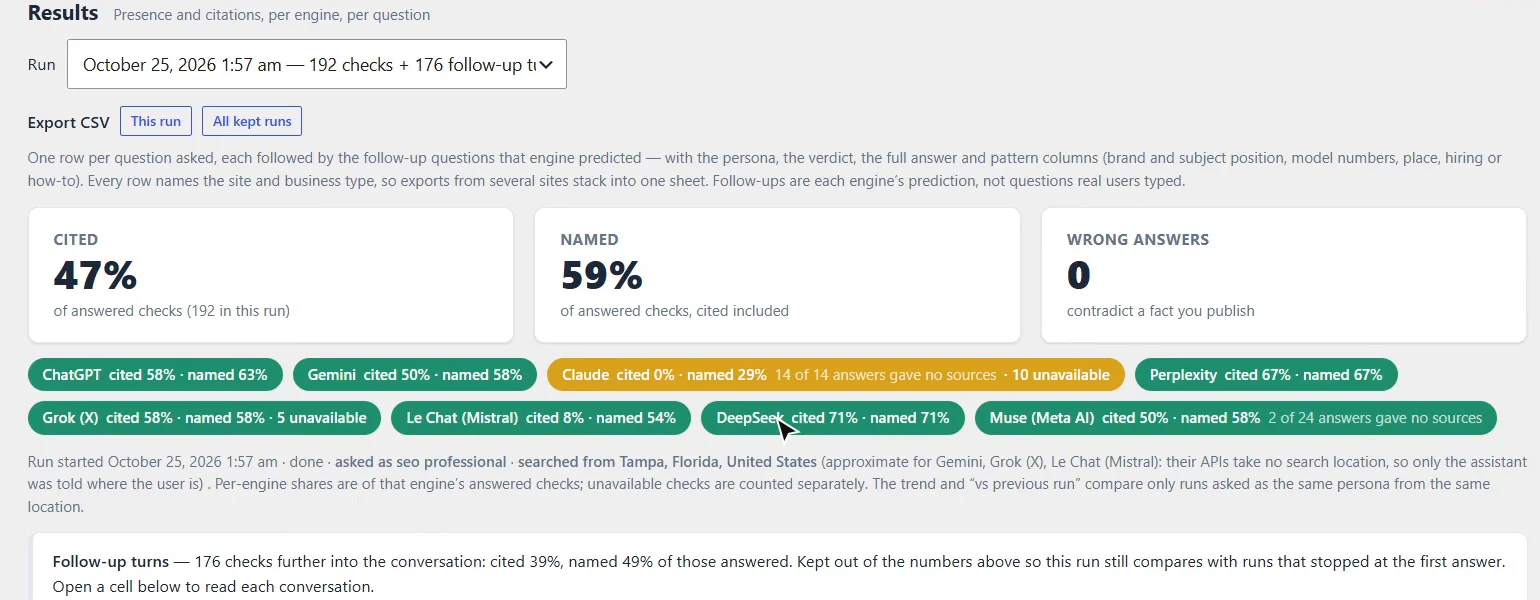
Run one: twenty-four questions, eight engines. DeepSeek cited us most. Claude ran out of API credits partway through, so its missing checks count as unavailable, not as misses.
1:08 What the buyer questions show
The buyer questions tell the real story. Best AEO plugin for WooCommerce: three engines cite us and two more name us. Best WordPress AEO plugin: only DeepSeek.
1:21 2. Check your content
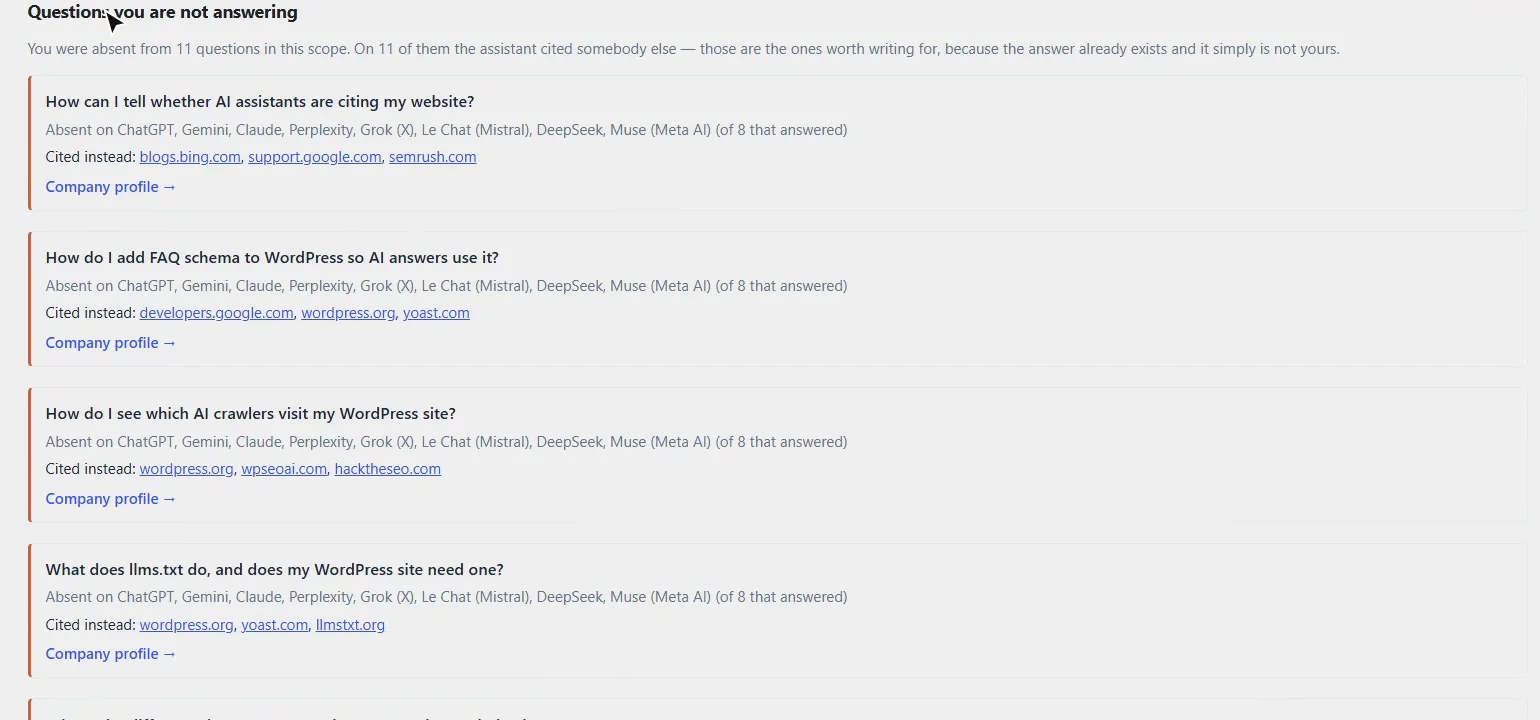
Thing two: check your content. On six how-to questions, like adding FAQ schema or what llms.txt does, no engine that answered mentioned us at all. They cited Google, OpenAI and Yoast documentation instead. We make the tool, but we haven't written those answers.
1:42 3. Your evidence, including your own pages
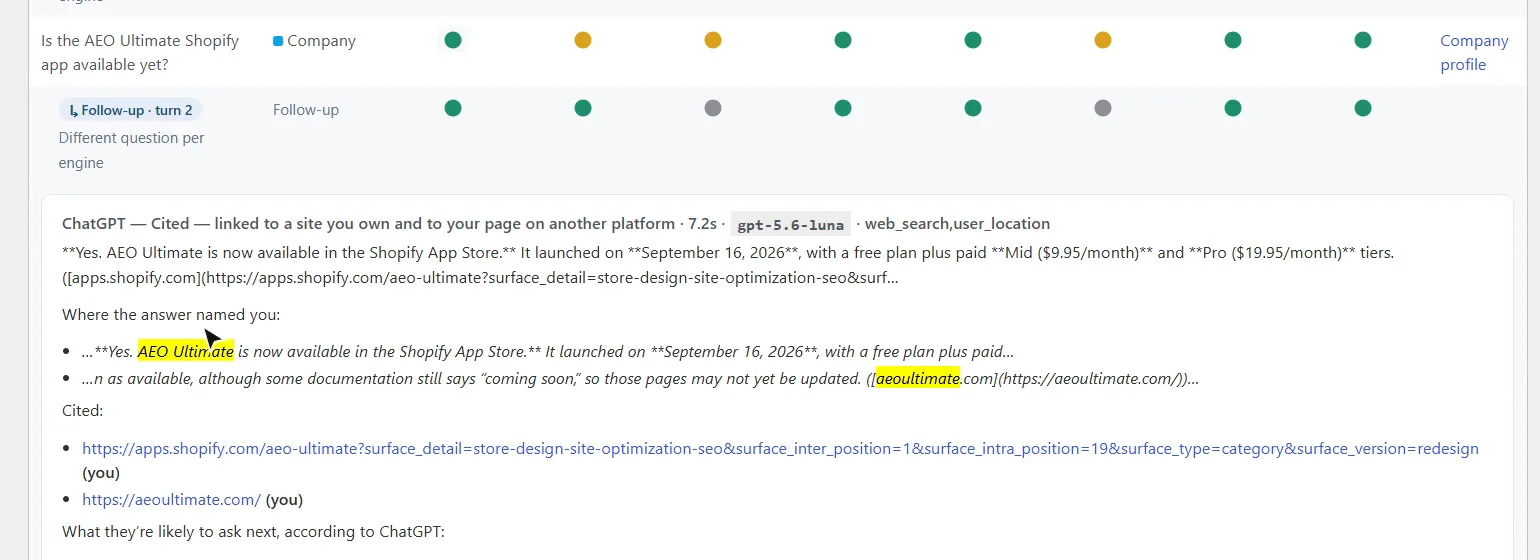
Thing three: your evidence, and that includes your own pages. Asked whether our Shopify app is available, every engine said yes. But ChatGPT added that some of our documentation still says coming soon.
1:59 The AI was right, our pages were wrong
It's right. This page still says the Shopify app isn't shipped. And our comparison page on tampawebtech.com lists llms.txt and bot controls as planned, which DeepSeek repeats. The AI read our pages correctly. Our pages are wrong. We're leaving both as they are, and fixing them in part two.
2:22 Evidence you can't write yourself: reviews
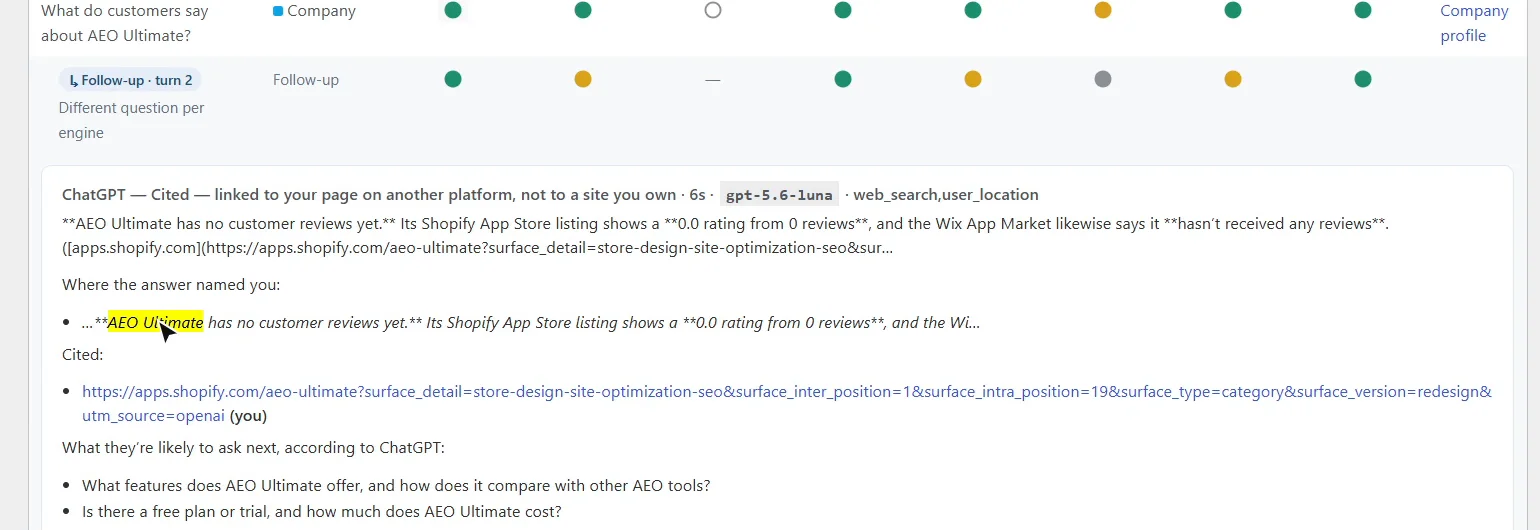
Some evidence you can't write yourself. Asked what customers say, ChatGPT answered that AEO Ultimate has no reviews yet, and twenty-five answers in this run mention it. The only fix is real customers leaving honest reviews. Never fake them.
2:40 4. Follow the conversation
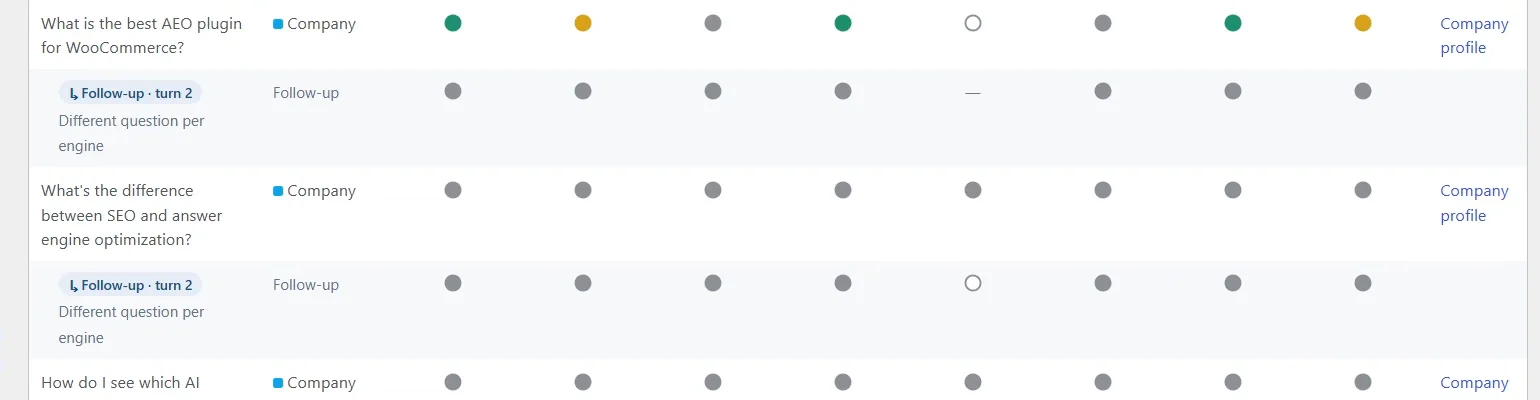
Thing four: follow the conversation. Where an engine cited or named us first, eight times out of eleven its follow-up answer moved on to someone else. Being recommended once isn't the same as staying recommended.
2:54 5. Measure again
Thing five is measuring again. In six days we'll run the exact same check before changing anything, to see how much results move on their own. Then we fix these mistakes and measure whether AI notices. That's part two.
What are the five things you can do to get cited by AI?
- Measure with the questions buyers ask, not your brand name.
- Check your content: is there a page of yours that answers the question better than anyone else’s?
- Check your evidence, including your own pages and what others say about you.
- Follow the conversation: are you still recommended when the buyer asks a follow-up?
- Measure again, the same way, and compare.
The only answer engine optimization tool on aeoultimate.com is our own plugin, AEO Ultimate. Every result here comes from its AI Visibility screen (TWT AEO → AI Visibility), which asks eight AI engines your questions on your own API keys and records whether each answer cited you, named you without a link, or left you out.
Why shouldn’t you measure AI visibility with your brand name?
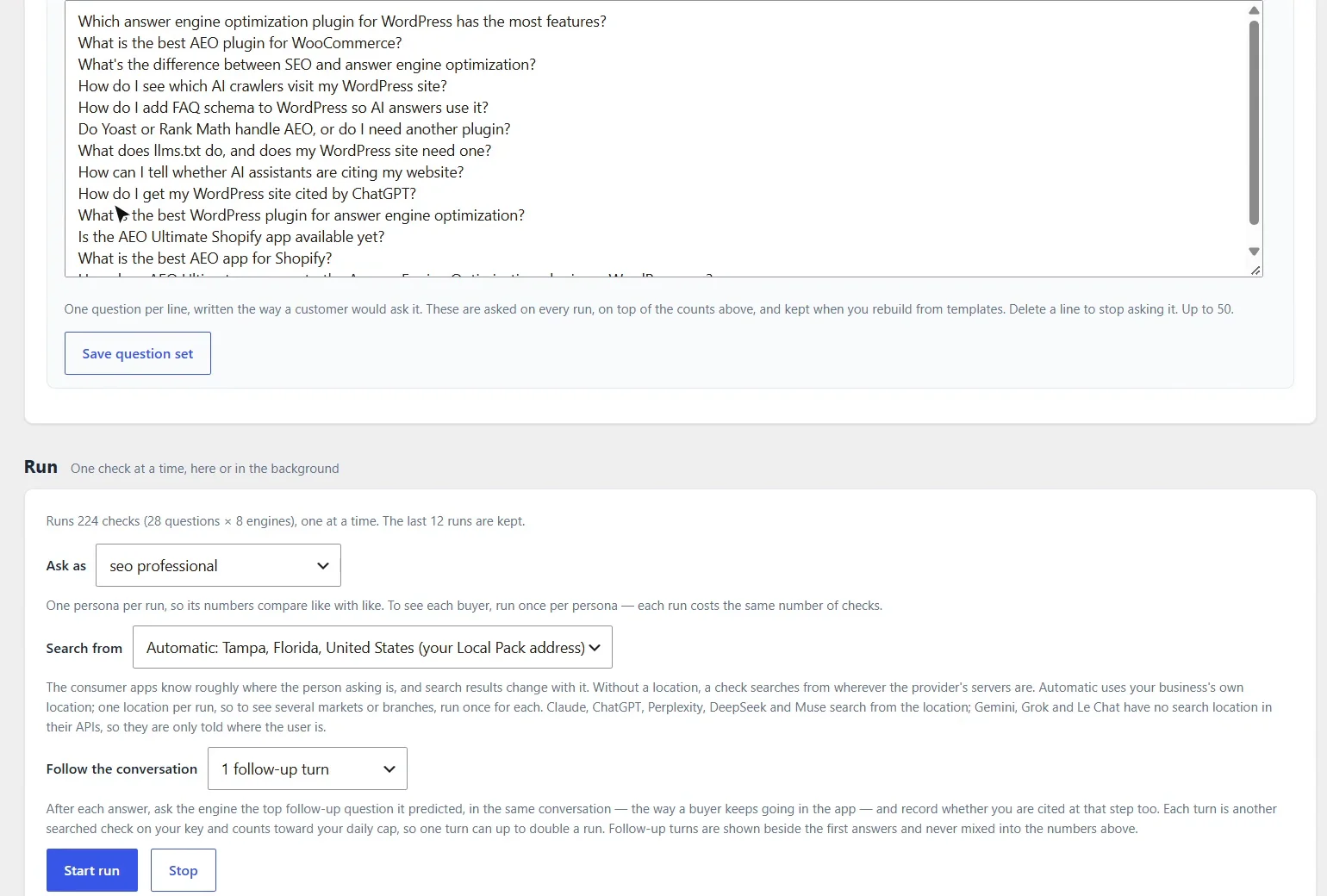
Because you will almost always be cited for your own name, and that proves nothing. Our first question list only asked things like “What is AEO Ultimate?”, and nearly every engine cited us. So we added ten questions people ask before they have heard of us, such as “What is the best AEO plugin for WooCommerce?” and “How do I get my WordPress site cited by ChatGPT?”, plus two about our Shopify app and one comparing us with a competitor. Add yours under Questions → Your own questions, one per line, written the way a customer would type them.
How do you make AI visibility runs comparable?
Ask the same way every time. AI answers change with who is asking and where they are, so pick one buyer persona, one search location and one follow-up setting, and keep all three for every run. We ask as an SEO professional, from Tampa, Florida, with one follow-up turn, and the same 24 questions. Change any of those between runs and the numbers move for reasons that have nothing to do with your site.
What did the first AI visibility run show?
Across 24 questions and eight engines, 47% of answered checks cited aeoultimate.com and 59% named it. DeepSeek cited us most, in 17 of 24 answers. Claude ran out of API credits partway through, so 10 of its checks are recorded as unavailable, not as misses. The buyer questions are where the picture changes: for the best AEO plugin for WooCommerce, ChatGPT, Perplexity and DeepSeek cited us and Gemini and Meta AI named us. For the best WordPress AEO plugin, only DeepSeek did.
Why don’t AI engines cite you for how-to questions?
Usually because someone else has written the better answer. On six how-to questions, from adding FAQ schema to what llms.txt does, no engine that answered mentioned us at all. They cited Google’s and OpenAI’s own documentation, Yoast, wordpress.org and llmstxt.org instead. We make a plugin that does these things, but we had not written the answers. Questions you are not answering lists each one with the sites cited instead: those are the pages worth writing.
Can your own pages hurt your AI citations?
Yes. AI engines read your pages and repeat them, including the out-of-date ones. Asked whether our Shopify app is available, every engine said yes, but ChatGPT added that some of our documentation still said “coming soon”, and DeepSeek quoted it. It was right. Our AEO, GEO and SEO plugins page still listed the Shopify app as not shipped, and a comparison page on tampawebtech.com still marked llms.txt and bot controls as “Planned”. The AI read our pages correctly. Our pages were wrong. Click any cell in the question grid to read the full answer and the sentences that named you.
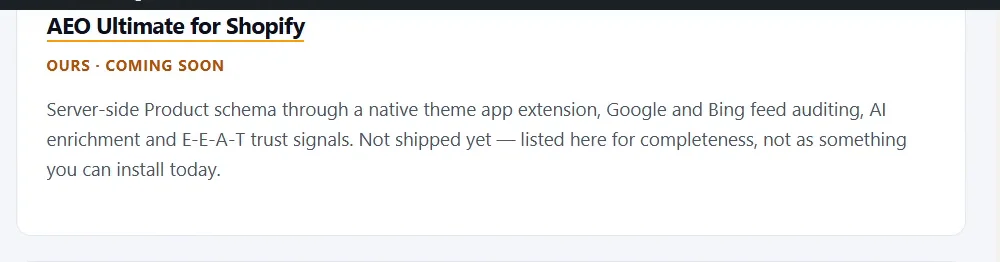
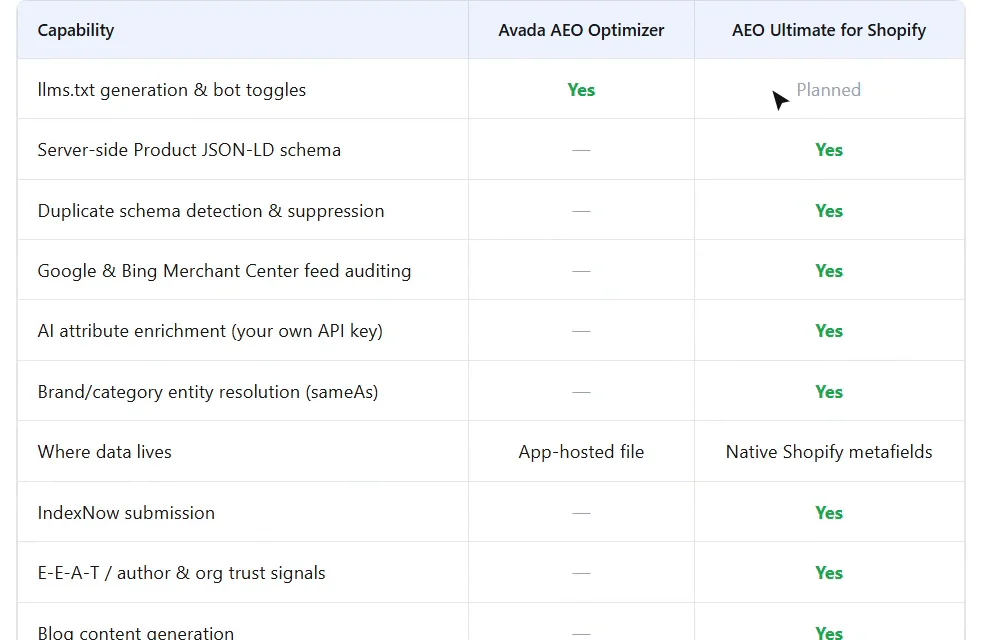
We left both pages as they were for this run on purpose. Fixing them, and measuring whether the engines notice, is part 2.
Update, October 25, 2026: right after this run, we corrected both pages. The Shopify card on the plugins page now says the app launched in September 2026, and the tampawebtech.com comparison no longer says “Planned”. So the next run, about six days later, shows how quickly each AI engine notices a corrected page. Some may pick it up within days, others take weeks.
Do reviews affect whether AI recommends you?
AI engines look for independent evidence, and they say so when there is none. Asked what customers say, ChatGPT answered that AEO Ultimate has no customer reviews yet, and 25 answers in this run mentioned it. No page you publish fixes that. The only fix is real customers leaving honest reviews on the platforms where you are listed. Never fake them, and never add review schema for reviews that do not exist.
Does being recommended once mean AI keeps recommending you?
No. With Follow the conversation on, each engine is asked the next question it predicts the buyer will ask, in the same conversation. Where an engine cited or named us on the first answer, its follow-up moved on to someone else in 8 of 11 cases. The WooCommerce question is the clearest: five engines recommended us, and none of their follow-ups did. Follow-up turns are kept out of the main numbers, so runs with and without them still compare.
How do you know whether a change worked?
Measure again, the same way, more than once. A single citation is not proof, and a change after a fix does not prove the fix caused it: answers move on their own from day to day. So we run the exact same check again about six days later, and again after that, and compare. The trend chart on the AI Visibility screen only compares runs asked as the same persona from the same location, for the same reason.
Coming in part 2
Run two with the same settings, the two pages fixed, and the results either way, including if nothing changes.
AEO audit and setup · one time
Keep Yoast. We’ll set up the AI side next to it.
Your SEO plugin keeps doing its job. For a one-time $250, we audit your WordPress site for AI search, set up AEO Ultimate alongside Yoast, Rank Math, All in One SEO or SEOPress, and run a week of AI checks on ChatGPT, Google and Perplexity, so you see whether they name you, and who they name instead.
- Nothing gets uninstalled and no URLs change.
- Lead tracking on your contact forms, so you see which leads came from AI tools.
- Done within two business days of getting access, then a walkthrough for you or your SEO team.
- No monthly fee. The plugin stays free.
The audit is sold by Tampa Web Technologies, the company that makes AEO Ultimate, so the button takes you to checkout on tampawebtech.com.
New to AI Visibility? Start with the AI Visibility guide, or see all tutorials.
Still stuck?
Message me directly — free tier included. Most replies land within the hour during Tampa working hours. Get support →