Docs / for Shopify / Advanced AI citations for Shopify: is each engine citing you for your real searches?
AEO Ultimate for Shopify
Advanced citations: every wording is its own question
“Soy candle large” and “large soy candle” are different searches, and every AI turns each one into its own question. Advanced citations, on the Pro plan, checks whether each engine cites your store for the questions its own users would ask about your real searches. The video and screenshots were made on a development store with no search traffic, so their results are labelled sample data.
How does Advanced citations work?
Open Pro checks → Advanced citations. Step 1 reads your real searches from Search Console (connect it on the Search intent page first) and finds each search’s own country: the one with most of its impressions, or your store’s market when there is no country data. That country’s top AI engines then each write the question their users would ask, for the search as typed and with its words reordered. Step 2 asks each engine its own questions, more than once, and reports “cited X of Y”.
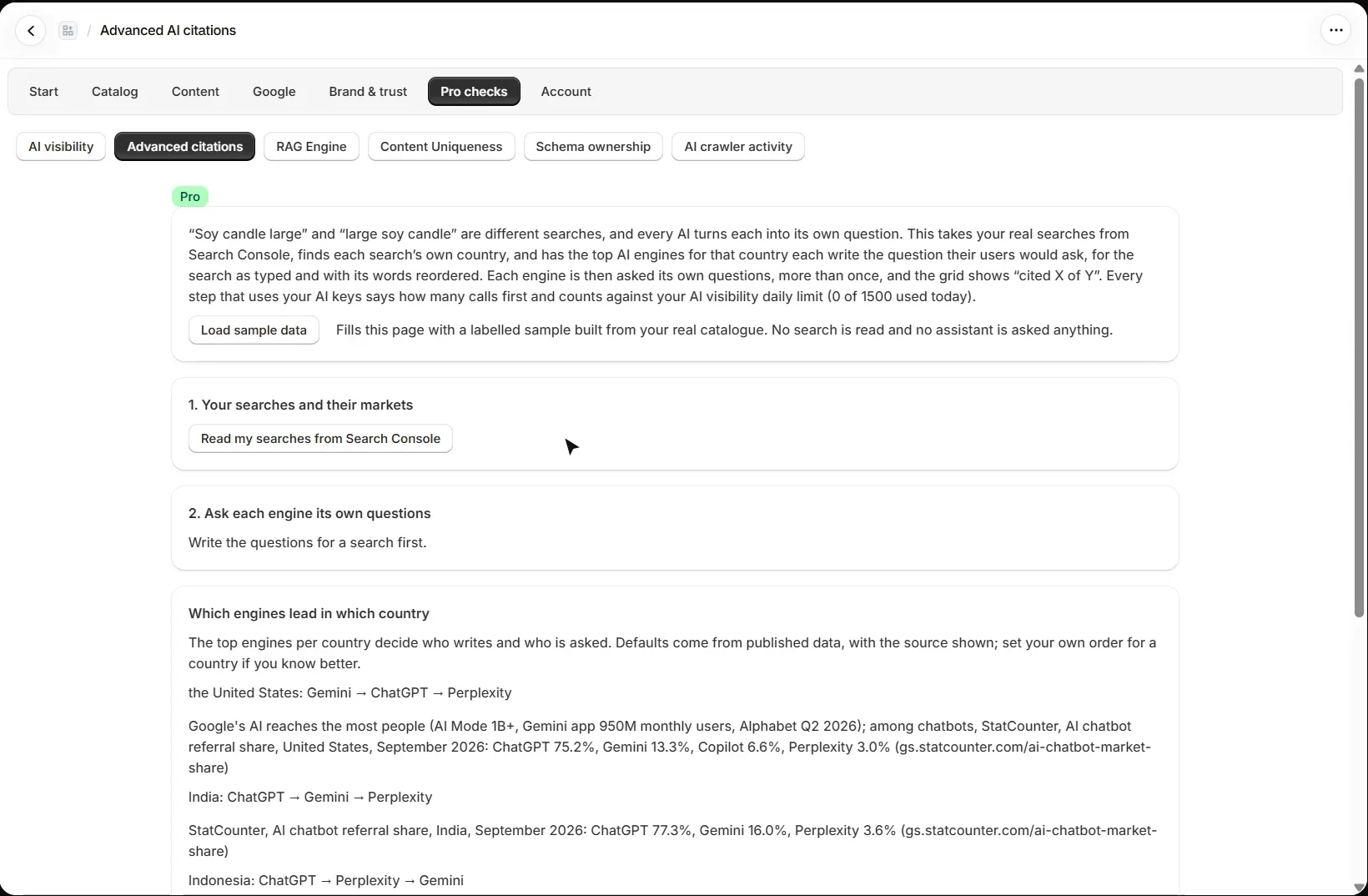
Which AI engines are used in each country?
The top engines per country decide who writes the questions and who is asked. Defaults come from published data, with the source shown on the page: in the United States, Google’s Gemini (which stands for all of Google’s AI, including AI Mode), then ChatGPT and Perplexity; in India, ChatGPT first. Set your own order for any country if you know better. A top engine with no key is skipped and reported, never replaced by the next one.
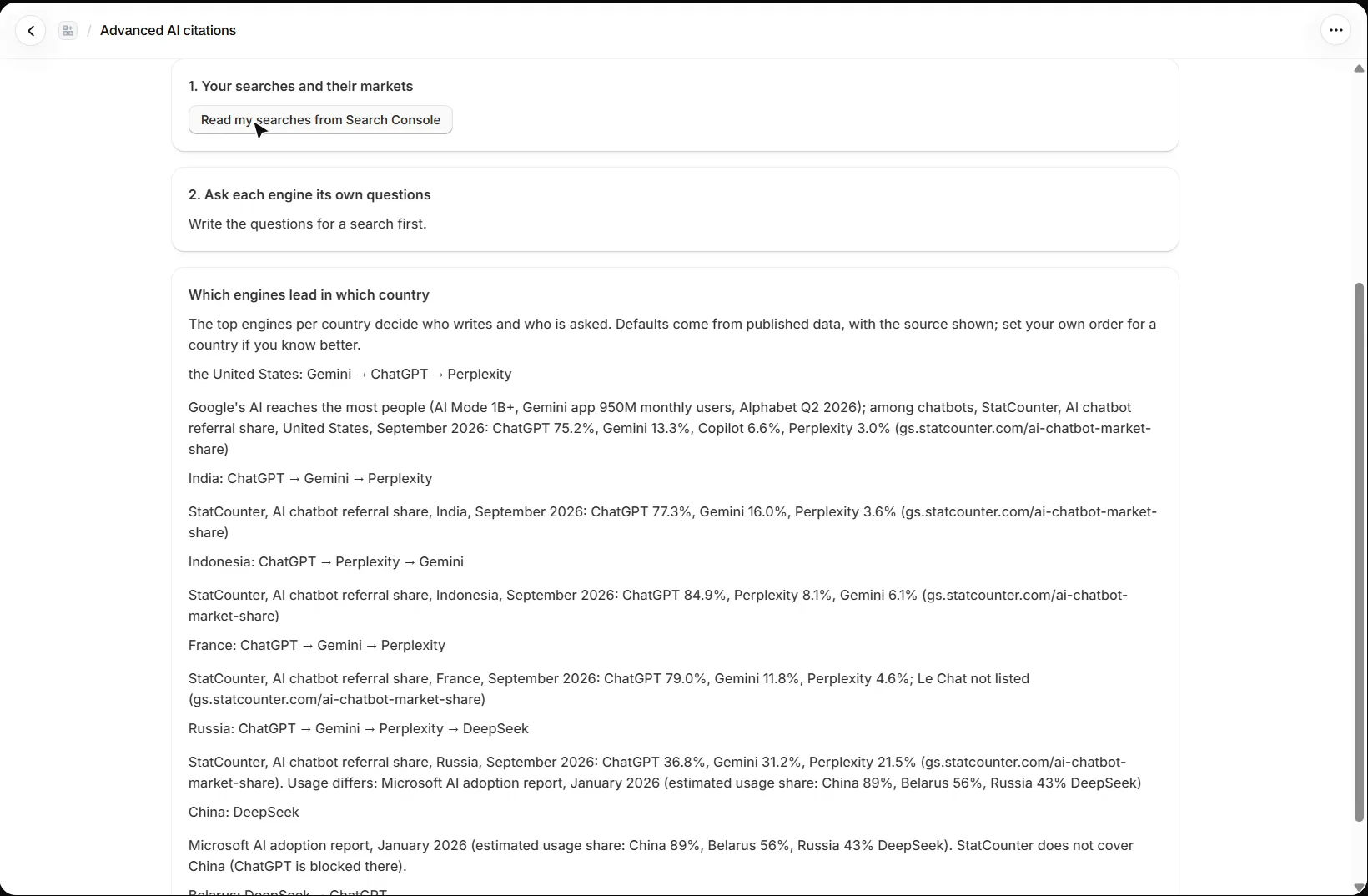
What does a check cost?
Every step that uses your AI keys says how many calls it will make first. Step 1 lists each search with its market, the engines that would write its questions and the number of AI calls, before anything is spent; searches with fewer than 10 impressions are left out. All calls run on your own keys and count against your AI visibility daily limit, so a long run pauses at the cap and continues the next day.
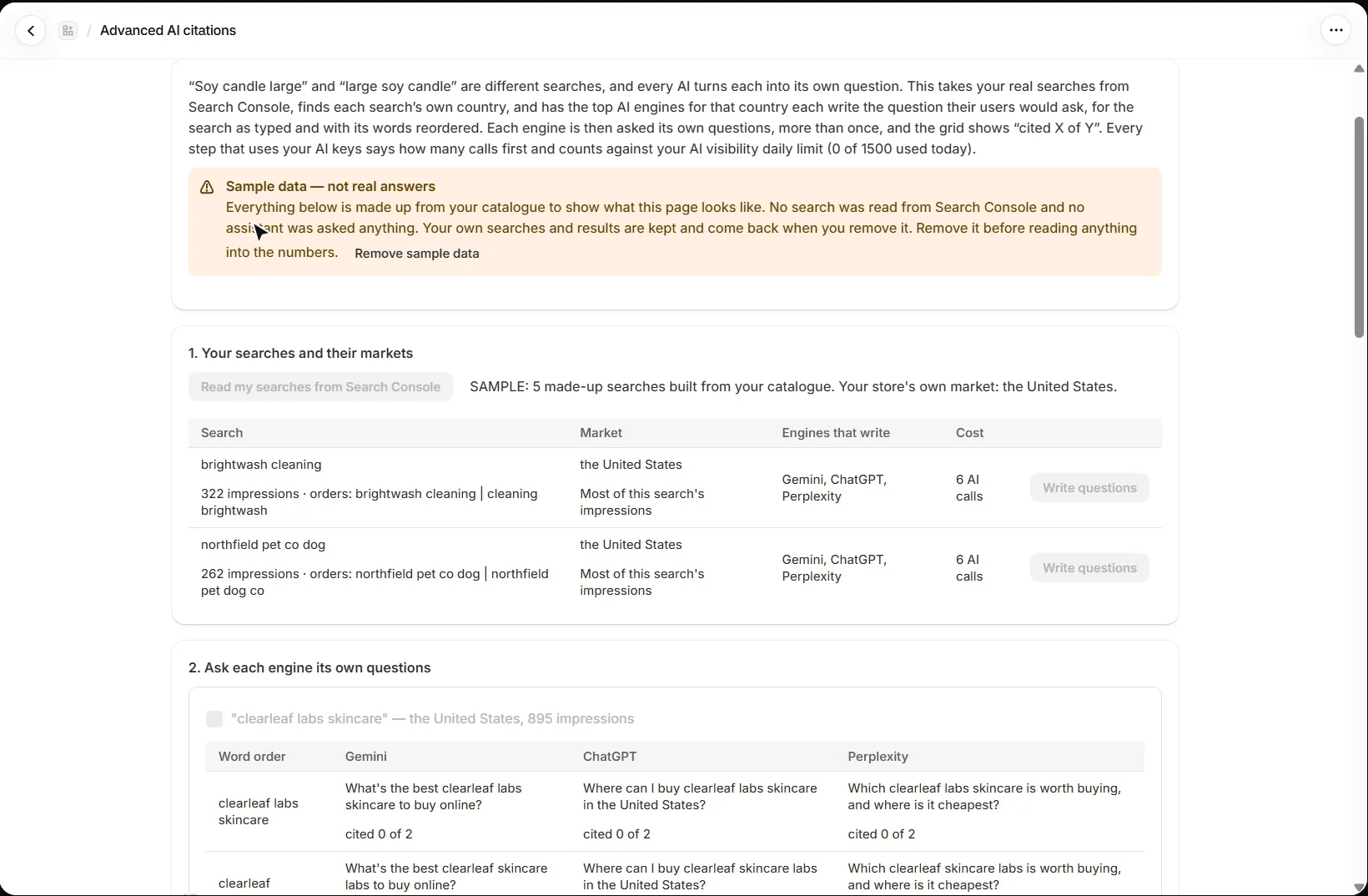
How do I read the cited X of Y grid?
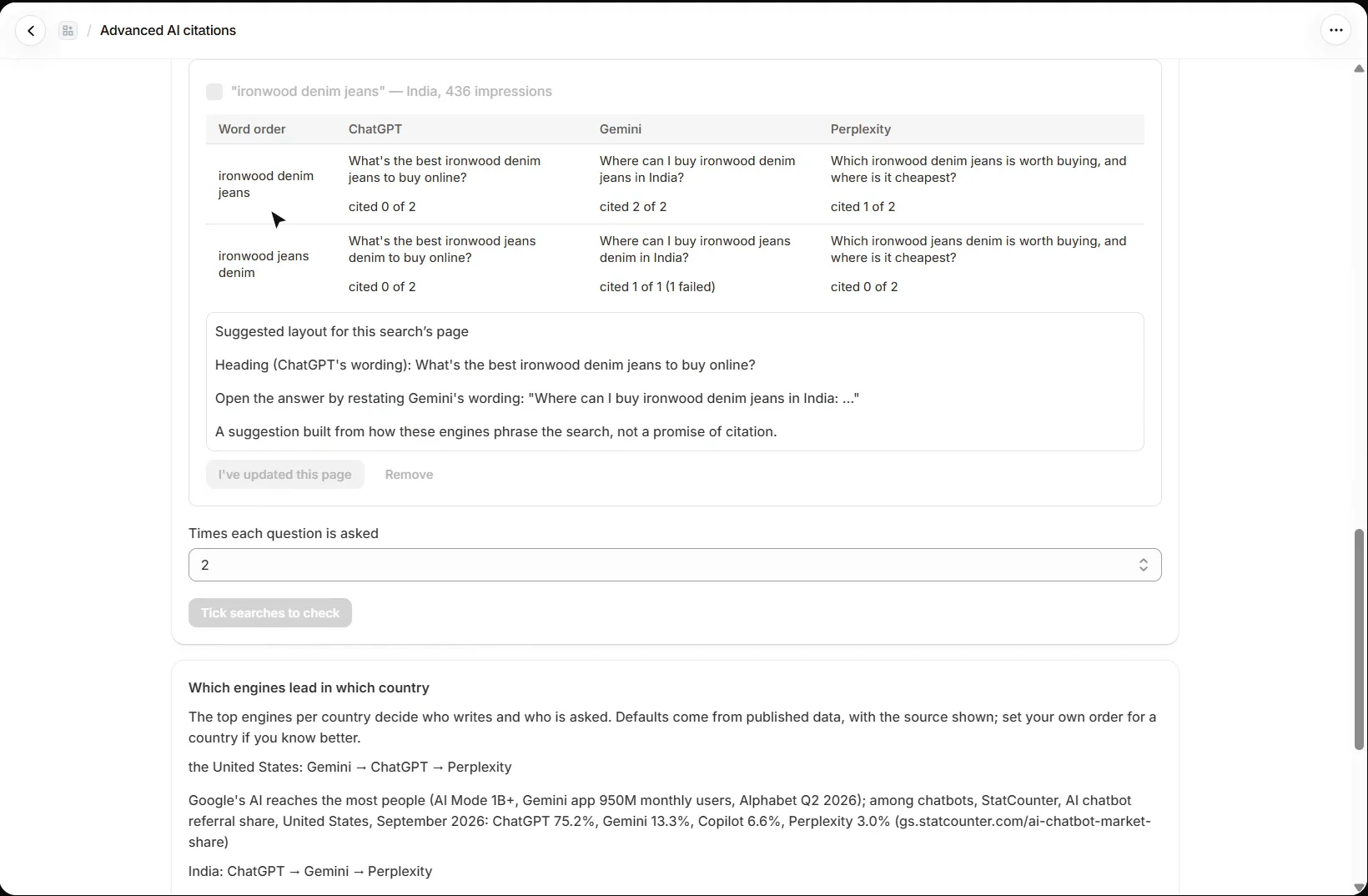
Each search gets a grid: one row per word order, one column per engine, each cell showing that engine’s own question and how often it cited your store, such as “cited 1 of 2”. Each engine is only ever asked its own wording, and a written question never changes, so runs stay comparable. A failed check is shown separately and never counted as “not cited”.
Below the grid is a suggested layout for that search’s page: a heading in the wording of the market’s first engine, and an opening line that restates the second engine’s question. It is a suggestion built from how the engines phrase the search, not a promise of citation. Once you have updated the page, press I’ve updated this page, and the next run shows the results before and after.
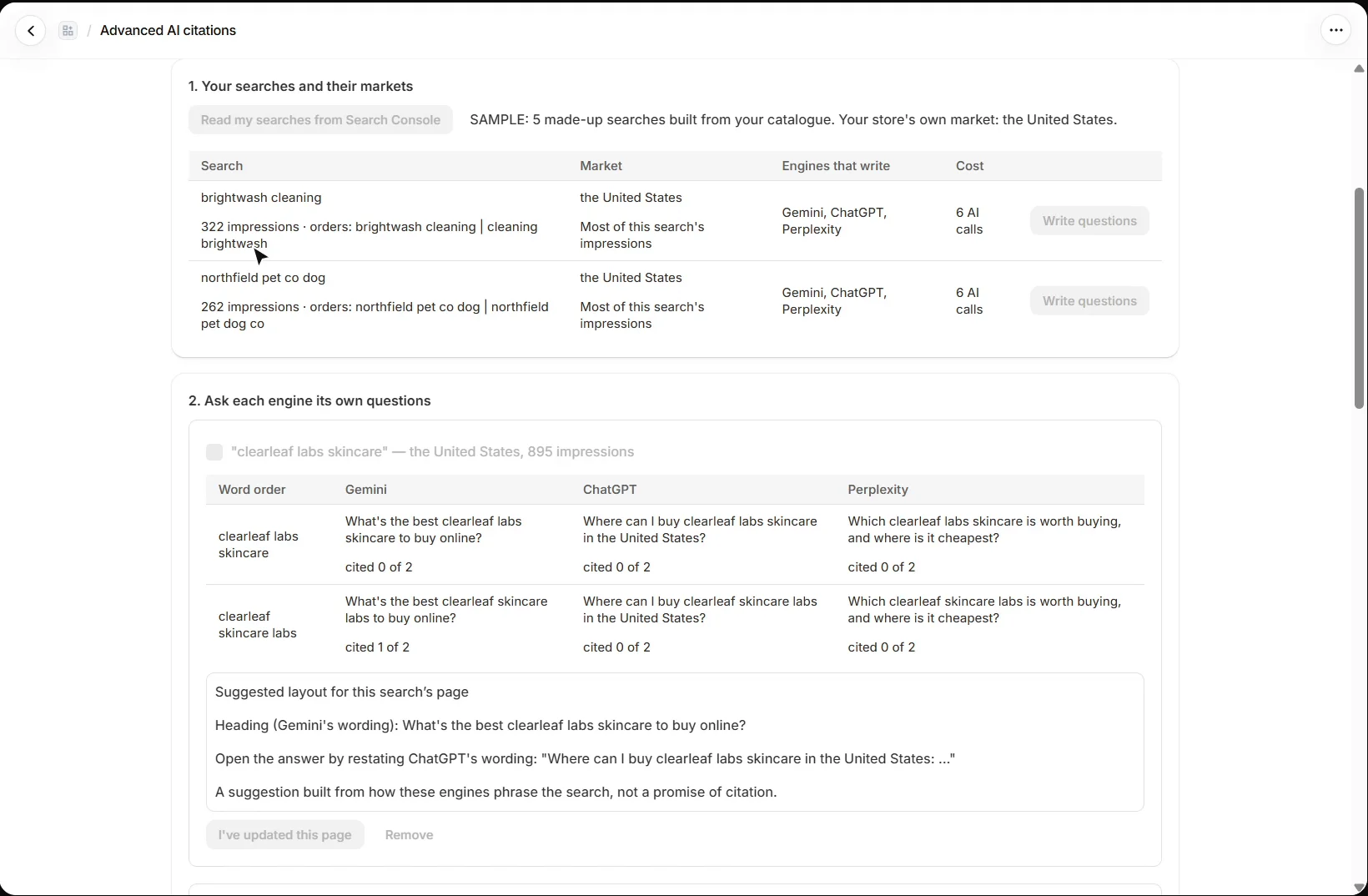
Why do searches from other countries get different engines?
Because shoppers in different countries use different assistants. A search whose impressions come mostly from India is written and asked by India’s top engines, with ChatGPT first, while a search from the United States starts with Gemini.
What should I set up next?
Next is AI crawlers and schema ownership. Every walkthrough is listed in the Shopify video tutorials.
Still stuck?
Message me directly — free tier included. Most replies land within the hour during Tampa working hours. Get support →